


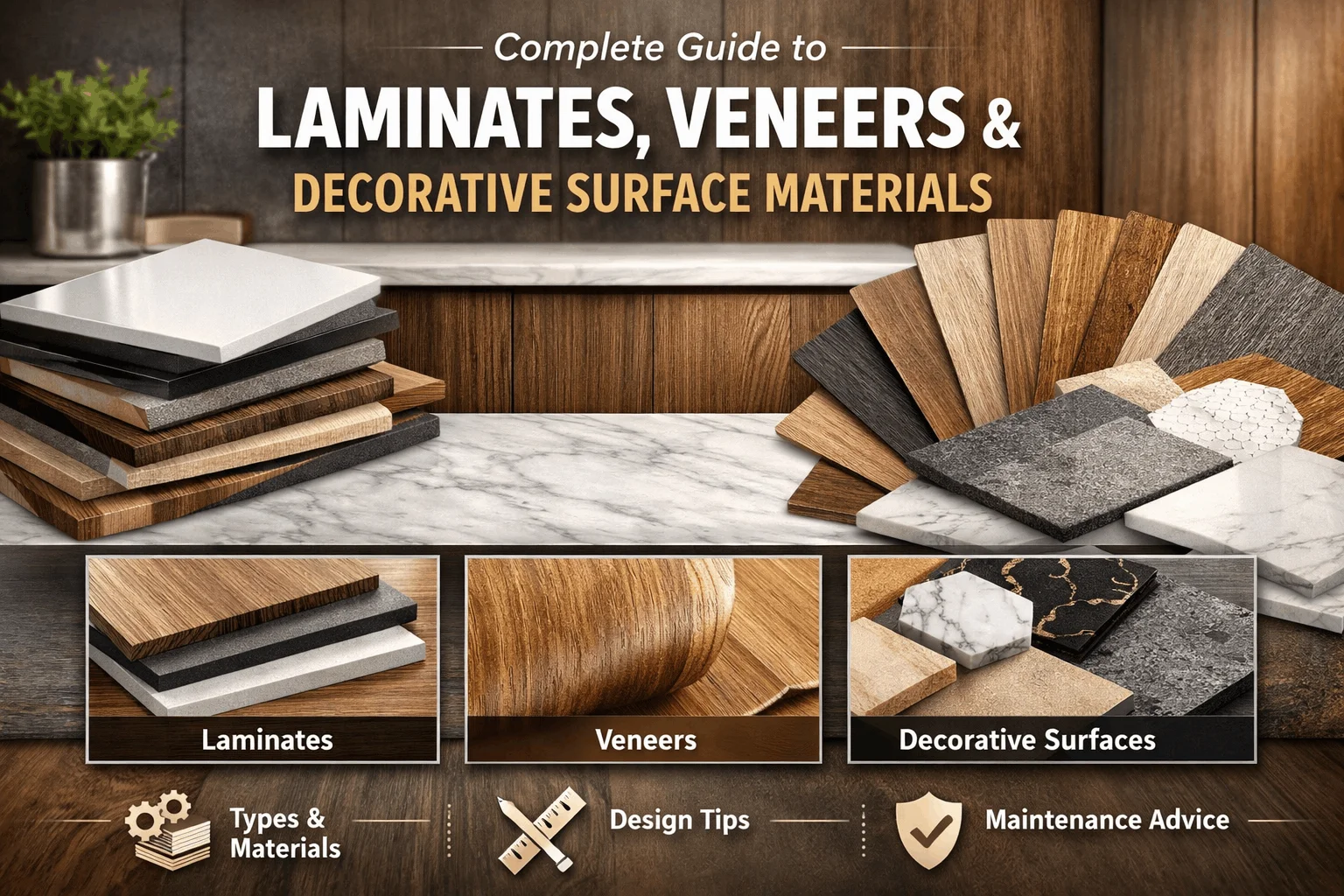
Introduction — Why Surface Materials Matter in Modern Interiors?
The appearance, durability, and maintenance level of furniture depend heavily on the surface material used. Laminates and veneers not only improve aesthetics but also protect furniture from scratches, stains, and daily wear. From kitchens and wardrobes to office furniture and commercial interiors, selecting the right laminate and decorative surface ensures long-term performance.
Many buyers choose laminates based only on color or design. However, finish type, durability, maintenance requirements, and substrate compatibility are equally important. At Piccaso Ply, customers frequently ask which decorative surface is best for practical long-term use. This guide explains everything clearly to help homeowners, designers, and contractors make confident decisions.
Quick Answer: Laminates vs Veneers
Laminates are engineered decorative sheets known for durability, low maintenance, and design variety, making them ideal for kitchens, wardrobes, and commercial furniture. Veneers are natural wood layers that offer a premium appearance but require more care. For everyday interiors requiring durability and easy maintenance, laminates are usually the better choice.
Decorative Surface Selection at a Glance
| Requirement | Recommended Choice |
|---|---|
| Low maintenance furniture | Laminates |
| Natural wood appearance | Veneers |
| Kitchen Cabinets | Laminates |
| Commercial interiors | Laminates |
| Luxury furniture finish | Veneers |
| High durability needs | Laminates |
What Are Decorative Laminates?
Decorative laminates are engineered sheets produced by compressing layers of kraft paper and decorative design paper under heat and pressure. These sheets are bonded onto plywood or other substrates to enhance both appearance and durability.
Why Laminates Are Widely Used?
- Wide range of designs and textures
- Scratch and stain resistance
- Easy cleaning and maintenance
- Consistent surface finish
- Cost-effective compared to natural wood
Summary: Laminates combine durability and design flexibility, making them ideal for modern interiors.
What Are the Different Types of Laminates?
Choosing the right laminate type helps balance appearance and performance.
Matte Laminates
Matte laminates have a soft, non-reflective finish suited for modern interiors.
Best for:
- Wardrobes
- Office furniture
- Minimalist interiors
Key benefits:
- Elegant look
- Less visible fingerprints
- Easy maintenance
Summary: Matte laminates are ideal for clean, modern spaces requiring subtle aesthetics.
Gloss Laminates
Gloss laminates provide a shiny, reflective surface that enhances brightness.
Best for:
- Kitchen cabinets
- Decorative furniture
- Compact spaces
Key benefits:
- Reflects light
- Premium appearance
- Smooth finish
Summary: Gloss laminates add brightness and a premium visual effect.
Textured Laminates
Textured laminates replicate natural materials like wood or stone.
Best for:
- Living room furniture
- Feature walls
- Designer interiors
Key benefits:
- Natural feel
- Depth and character
- Trend-focused designs
Summary: Textured laminates create a natural, sophisticated appearance.
Anti-Fingerprint Laminates
These laminates reduce visible smudges and fingerprints.
Best for:
- Kitchens
- Offices
- High-touch furniture
Key benefits:
- Easy cleaning
- Cleaner appearance
- Suitable for heavy usage
Summary: Anti-fingerprint laminates are practical for busy spaces requiring minimal upkeep.
What Is the Difference Between Laminates and Veneers?
| Feature | Laminates | Veneers |
|---|---|---|
| Material Type | Engineered sheet | Natural wood layer |
| Durability | High | Moderate |
| Maintenance | Easy | Requires care |
| Cost | Affordable | Premium |
| Moisture Resistance | Good | Moderate |
| Design Variety | Very high | Limited |
| Finish Consistency | Uniform | Natural variation |
Summary: Laminates are more durable and practical, while veneers offer a natural premium look.
Where Should You Use Laminates?
Kitchen Cabinets
Laminates are preferred because they resist stains, moisture, and daily wear.
Wardrobes
Matte and textured laminates provide durability with modern aesthetics.
Office Furniture
Scratch-resistant laminates are ideal for desks and storage units.
Commercial Interiors
Laminates work well due to durability and easy maintenance.
Summary: Laminates are suitable for both residential and commercial furniture where durability matters.
How Do You Choose the Right Laminate for Furniture?
Step-by-Step Selection Framework
Step 1:
Identify usage area (kitchen, wardrobe, office, commercial).
Step 2:
Choose finish type (matte, gloss, textured).
Step 3:
Check durability requirements like scratch resistance.
Step 4:
Match laminate color with interior style.
Step 5:
Use strong base materials like Piccaso Ply laminate for better long-term performance.
Common Mistakes When Selecting Laminates
- Choosing design without checking durability
- Ignoring laminate thickness
- Selecting gloss finishes for high-touch areas
- Not considering maintenance needs
- Using poor-quality substrate material
Practical Tip: Even premium laminates perform best when applied on quality plywood such as Piccaso Ply.
Laminate Thickness Guide
| Thickness | Recommended Usage |
|---|---|
| 0.6mm | Standard furniture |
| 0.8mm | Residential interiors |
| 1.0mm | Heavy-use furniture |
| 1.5mm+ | Commercial spaces |
Latest Laminate Design Trends
Modern interiors increasingly prefer:
- Natural wood textures
- Neutral matte finishes
- Minimalist color palettes
- Soft stone patterns
- Subtle grains
Interior professionals often choose laminate collections from brands like Piccaso Ply to match evolving design preferences.
Practical Maintenance Tips
- Clean with a soft cloth
- Avoid abrasive chemicals
- Wipe spills immediately
- Use coasters under hot items
- Avoid sharp objects on surfaces
Summary: Proper maintenance extends laminate lifespan significantly.
Expert Practical Tips
- Matte laminates work best for large surfaces.
- Anti-fingerprint laminates suit kitchens and workspaces.
- Match laminate tone with room lighting.
- Use calibrated plywood underneath for better finish quality.
- Durable laminates reduce long-term maintenance costs.
Laminate Buying Decision Table
| If You Need | Choose This |
|---|---|
| Modern minimalist look | Matte laminate |
| Bright reflective finish | Gloss laminate |
| Natural wood feel | Textured laminate |
| Low maintenance surfaces | Anti-fingerprint laminate |
Frequently Asked Questions
Which laminate is best for kitchen cabinets?
Matte or anti-fingerprint laminates are ideal for kitchen cabinets because they resist stains, fingerprints, and daily wear. They are easy to clean and maintain, making them suitable for high-use environments where hygiene and durability are important.
Are laminates waterproof?
Laminates are moisture-resistant but not fully waterproof. Proper installation and edge sealing help prevent water seepage and improve long-term durability.
Laminates or veneers — which lasts longer?
Laminates generally last longer because they are engineered for durability and require less maintenance compared to natural veneers, which are more delicate.
Which laminate finish is easiest to maintain?
Matte and anti-fingerprint laminates are easiest to maintain because they hide smudges and scratches better than glossy surfaces.
Can laminates be used in commercial interiors?
Yes, laminates are widely used in offices and retail spaces because they provide durability, easy maintenance, and consistent appearance under heavy usage.
Key Takeaways
- Laminates are durable and low maintenance.
- Veneers offer natural wood aesthetics but require care.
- Matte laminates suit modern interiors.
- Anti-fingerprint laminates are ideal for kitchens.
- Using quality base materials like Piccaso Ply improves long-term performance.
Conclusion — Choosing the Right Decorative Surface
Selecting the right decorative surface improves both aesthetics and durability of furniture. Laminates are often the preferred choice for modern interiors because they combine design flexibility with long-term practicality. Veneers work well where natural wood appearance is the primary goal.
Before making a final decision, consider:
- Usage area
- Maintenance requirements
- Finish preference
- Durability needs
Choosing reliable decorative surfaces and quality base materials from trusted brands like Piccaso Ply ensures better results and long-lasting interiors.