



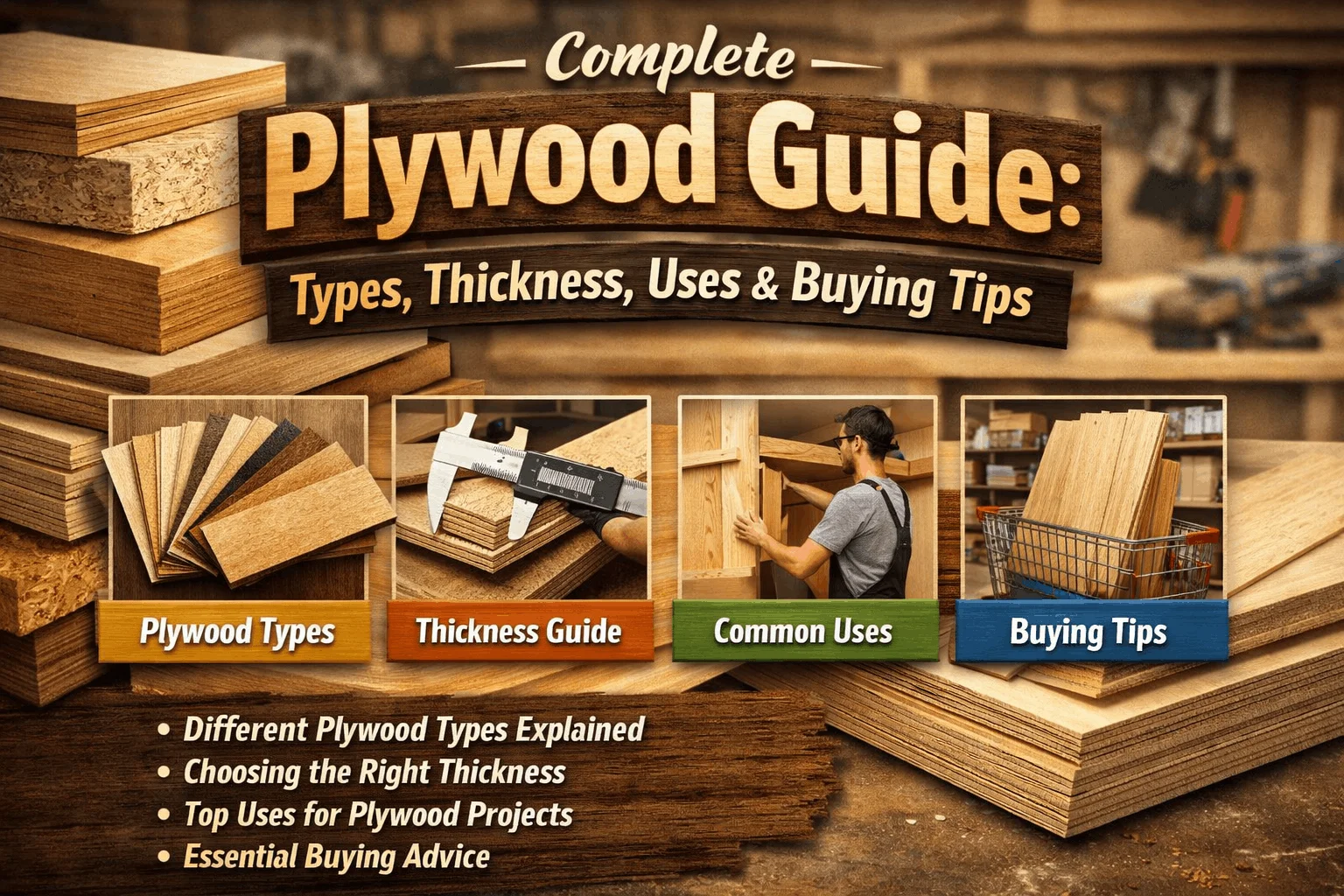
Introduction — Why Choosing the Right Plywood Matters?
Plywood is one of the most widely used materials for furniture, interiors, and construction. From kitchen cabinets and wardrobes to office furniture and structural applications, the quality of plywood directly impacts durability, stability, and long-term performance.
Many buyers select plywood based only on price, which often leads to bending, moisture damage, weak joints, and shorter furniture lifespan. Choosing the right plywood type and thickness according to application helps avoid expensive repairs and replacements later.
At Piccaso Ply, customers often ask which plywood works best for specific furniture and interior needs. This guide explains plywood types, thickness selection, practical applications, and expert buying tips so homeowners, contractors, and interior professionals can make informed decisions.
Quick Answer: Which Plywood Is Best?
Marine plywood is best for kitchens and moisture-prone areas due to its water-resistant bonding. Commercial plywood works well for general furniture in dry interiors, while calibrated plywood is ideal for modular furniture because of its uniform thickness and smooth finishing.
Many interior professionals working with Piccaso Ply products prefer selecting plywood based on usage conditions rather than price alone for long-term durability.
Plywood Selection at a Glance
| Requirement | Recommended Plywood |
|---|---|
| Kitchen Cabinets | Marine Plywood |
| Wardrobes | Commercial / Calibrated Plywood |
| Modular Furniture | Calibrated Plywood |
| Construction Use | Shuttering Plywood |
| Moisture-Prone Areas | Marine Plywood |
What Is Plywood?
Plywood is an engineered wood product made by bonding multiple thin wood veneers together under heat and pressure. Each layer is placed with grains running in opposite directions, which increases strength and reduces warping.
Why Plywood Is Preferred Over Solid Wood?
- Better dimensional stability
- Higher load-bearing strength
- Less cracking and bending
- Cost-effective for large projects
- Easy to cut and finish
Summary: Plywood is stronger and more stable than solid wood because of its cross-layered construction, which is why manufacturers like Piccaso Ply focus on consistent layering and bonding quality.
What Are the Different Types of Plywood?
Understanding plywood types helps you select the right material for specific applications.
Marine Plywood
Marine plywood is manufactured using waterproof adhesive and high-quality hardwood veneers.
Best for:
- Kitchens
- Bathrooms
- Utility areas
- Moisture-prone interiors
Key benefits:
- High water resistance
- Strong internal bonding
- Long-lasting performance
Summary: Marine plywood is best for areas exposed to moisture and is commonly recommended by professionals working with Piccaso Ply for kitchen and utility furniture.
Calibrated Plywood
Calibrated plywood is precision-finished to maintain uniform thickness across the sheet.
Best for:
- Modular kitchens
- Machine-made furniture
- Premium interiors
Key benefits:
- Smooth finish
- Better laminate bonding
- Accurate dimensions
Summary: Calibrated plywood improves finishing quality and is often preferred when using laminates or premium surfaces from brands like Piccaso Ply.
Shuttering Plywood
Shuttering plywood is designed for construction and concrete support.
Best for:
- Formwork
- Construction frameworks
Key benefits:
- High strength
- Reusable surface
- Pressure resistance
Summary: Shuttering plywood is suitable for construction applications requiring high load capacity and repeated use.
Commercial Plywood
Commercial plywood is commonly used for indoor furniture where moisture exposure is minimal.
Best for:
- Wardrobes
- Beds
- Office furniture
- Interior panels
Key benefits:
- Cost-effective
- Good durability
- Easy availability
Summary: Commercial plywood is ideal for dry interior applications where balanced strength and affordability are important.
Which Plywood Thickness Is Best for Furniture?
Selecting the right thickness ensures furniture strength and durability.
| Thickness | Common Uses | Recommended Application |
|---|---|---|
| 6mm | Back panels | Decorative backing |
| 9mm | Shelves & partitions | Light furniture |
| 12mm | Cabinets & drawers | Medium load areas |
| 18mm | Wardrobes & beds | Heavy furniture |
| 25mm+ | Structural use | Specialized projects |
Practical Tip: Always match thickness with load requirements to prevent sagging and ensure long-lasting performance.
How Can You Identify Good Quality Plywood?
Check the Core
The inner layers should be compact and free from gaps.
Surface Finish
Smooth surfaces indicate better manufacturing quality.
Uniform Thickness
Calibrated sheets ensure better alignment and finishing.
Moisture Resistance
Quality plywood should resist minor moisture without swelling.
Brand Reliability
Choosing trusted brands like Piccaso Ply helps ensure consistent quality standards and reliable performance.
How to Choose the Right Plywood (Step-by-Step)
Step 1:
Identify where the plywood will be used (kitchen, furniture, construction).
Step 2:
Check moisture exposure level.
Step 3:
Select appropriate thickness based on load.
Step 4:
Choose calibrated plywood for modular furniture.
Step 5:
Balance durability with budget before purchasing.
Common Plywood Buying Mistakes
- Choosing only based on price
- Selecting incorrect thickness
- Using commercial plywood in wet areas
- Ignoring surface quality
- Not checking core strength
Practical Tip: Long-term durability always saves more than short-term cost savings — something buyers often realize after consulting experts at Piccaso Ply.
Plywood Buying Decision Table
| If You Need | Choose This |
|---|---|
| Budget-friendly furniture | Commercial plywood |
| Premium modular furniture | Calibrated plywood |
| Water resistance | Marine plywood |
| Construction strength | Shuttering plywood |
Expert Practical Tips
- Use marine plywood in moisture-prone areas.
- Calibrated plywood improves laminate finishing.
- Seal edges for additional protection.
- Heavier sheets usually indicate stronger core quality.
- Always select plywood based on usage, not price alone.
Frequently Asked Questions
Which plywood is best for kitchen cabinets?
Marine plywood is considered best for kitchen cabinets because it offers strong moisture resistance and long-term durability. Many interior professionals recommend marine-grade options available from reliable manufacturers like Piccaso Ply for better performance.
Is plywood better than MDF?
Plywood is stronger and more durable than MDF due to its cross-layered construction. It offers better screw holding strength and moisture resistance, making it suitable for long-lasting furniture.
What thickness is best for wardrobes?
18mm plywood is commonly recommended for wardrobes because it provides good strength and stability for doors and structural panels.
Is marine plywood waterproof?
Marine plywood is highly water-resistant due to waterproof adhesives and strong bonding, but proper sealing further improves lifespan.
Can commercial plywood be used in kitchens?
Commercial plywood is best for dry interiors. For kitchens and moisture-prone areas, marine plywood is generally recommended.
Key Takeaways
- Marine plywood is ideal for wet areas.
- Commercial plywood suits general interiors.
- Thickness selection impacts furniture strength.
- Calibrated plywood improves finishing quality.
- Choosing trusted brands like Piccaso Ply ensures better consistency and long-term durability.
Conclusion — Choosing the Right Plywood for Long-Term Performance
The right plywood selection improves furniture durability, finishing quality, and overall performance. Understanding plywood types, thickness options, and practical usage helps buyers avoid common mistakes and make better long-term decisions.
Before purchasing, always evaluate:
- Application area
- Moisture exposure
- Required strength
- Finishing requirements
Choosing quality plywood from reliable manufacturers such as Piccaso Ply helps ensure better results, longer-lasting interiors, and improved value over time.