



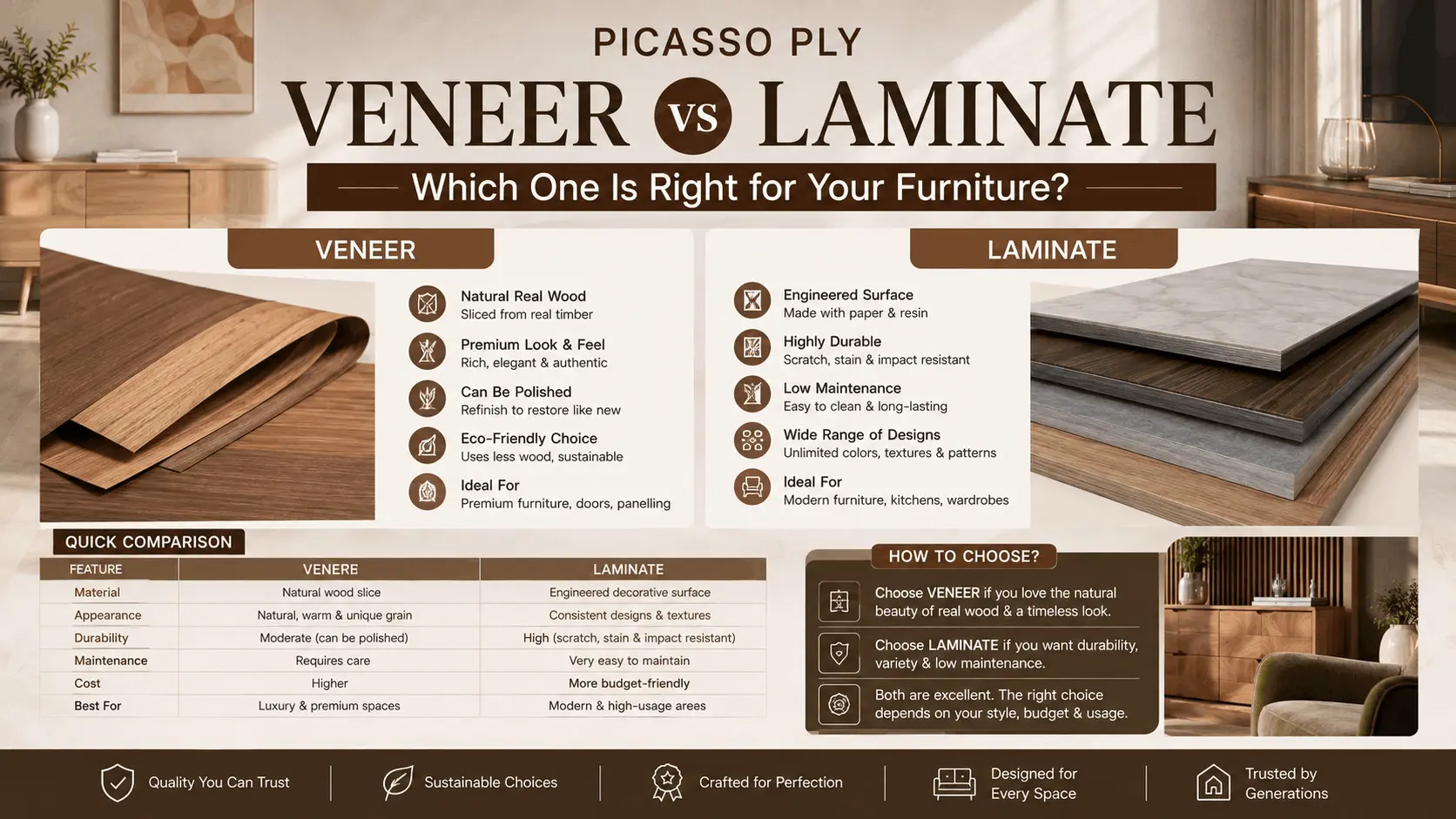
The dilemma usually shows up at the showroom counter. One sample has the warm, natural grain of real wood and feels premium in the hand. The other is tougher, cheaper, and comes in every colour you can name. The customer likes both and cannot tell which will still look good after five years of daily use. That is the veneer vs laminate choice, and it trips up a lot of buyers because the two are built and priced very differently. This guide compares veneer vs laminate honestly, based on look, durability, cost, and upkeep, so you can pick the right surface for each piece instead of guessing.
Quick Answer: Veneer or Laminate?
If you want the short version, choose veneer for a warm, natural real-wood look on feature and premium furniture, where you accept a higher cost and a little upkeep. Choose laminate for a tough, low-maintenance, budget-friendly surface on high-use furniture such as kitchen cabinets and wardrobes. Neither is better everywhere, and the right pick depends on the piece and the priority. Here is the full breakdown.
What Is Veneer?
Veneer is a thin slice of real wood bonded to a base board such as plywood or MDF. Because it is genuine timber, it carries a natural grain that can be polished, and no two sheets look exactly alike, which is a large part of its appeal. The honest trade-off is that veneer costs more, needs gentler care, and can be marked by scratches and water if it is not looked after. For a deeper look at picking quality, the teak veneer guide covers what to check, and the veneer range shows the options.
What Is Laminate?
Laminate is a printed decorative layer bonded over kraft paper and pressed hard onto a base board. The print can copy wood, stone, solid colours, and textures, and the pressed surface is durable, scratch-resistant, and easy to wipe clean. The honest trade-off is that it is a print rather than real wood, so up close it does not have the depth of natural grain. The decorative laminates guide covers finishes, and the laminate range shows the designs available.
Veneer vs Laminate: Head-to-Head Comparison
This is the heart of the veneer vs laminate question. The table below shows where each surface leads so you can match it to your furniture.
| Factor | Veneer | Laminate |
|---|---|---|
| Look and feel | Natural real-wood grain, premium | Printed design, many options |
| Durability | Good with care, can scratch | Very durable, scratch-resistant |
| Water and heat resistance | Needs protection | Handles moisture and heat well |
| Maintenance | Occasional polishing needed | Wipe clean, very low upkeep |
| Cost | Higher | Lower |
| Design range | Limited to wood species | Huge range of colours and patterns |
| Best use | Feature and premium furniture | High-use, everyday furniture |
Read together, the pattern is clear. Laminate wins on durability, cost, and low upkeep, which suits kitchens, wardrobes, and anything in daily use. Veneer wins on natural look and premium feel, which suits statement pieces where the real-wood grain is the point. The smartest interiors use both, matching the surface to the job of each piece.
Which Is Better for Each Use? (Verdict by Furniture Type)
Here is the practical verdict for the pieces people ask about most, which settles most of the laminate vs veneer for furniture debate:
- Kitchen cabinets and shutters: laminate. Kitchens face moisture, heat, and daily wiping, and laminate handles all three far better than veneer.
- Wardrobes: laminate for a high-use family wardrobe. For a feature wardrobe in a main bedroom, veneer is worth it if the budget allows.
- Feature walls, TV units, and statement furniture: veneer, for the natural grain that makes a piece look premium.
- Office and commercial furniture: laminate, since high-traffic use rewards its toughness and easy upkeep.
- Dining tables and premium pieces: veneer, with a note that it needs coasters and gentle cleaning to stay looking good.
- Doors: either one works, so choose veneer for a rich wood look or laminate for a hard-wearing, low-care surface.
Cost Comparison: Veneer vs Laminate
On veneer vs laminate cost, laminate is usually cheaper upfront and needs less spending over time, since it rarely needs refinishing. Veneer costs more to buy and asks for occasional polishing, but it delivers a natural look that laminate can only imitate. So the cost question is really a priorities question: if budget and low upkeep lead, laminate makes sense, and if the real-wood look leads and the piece deserves it, veneer is worth the extra. Both vary by quality, brand, and finish, so treat any figure as a starting point and compare on the look and life you actually want.
Maintenance: What Each Surface Needs
On veneer vs laminate durability and upkeep, the two ask for different care. Laminate wipes clean with a damp cloth, resists scratches and everyday knocks, and needs almost no special attention. Veneer needs a gentler routine: dust it, avoid harsh cleaners and standing water, and polish it occasionally to keep the grain looking rich. Neither is difficult, but veneer rewards a little care while laminate mostly looks after itself, and that difference matters when you decide which piece gets which surface.
How to Choose Between Veneer and Laminate
Run your piece through this short checklist before deciding:
- Look you want: real natural wood grain points to veneer, while any colour or pattern points to laminate.
- Budget: a tighter budget points to laminate, which costs less upfront and over time.
- Use and moisture: high-use and wet areas point to laminate for its toughness.
- Upkeep: if you will not keep up polishing, laminate is the safer choice.
The mix most interiors actually use is laminate for the workhorse pieces such as kitchens and everyday wardrobes, with veneer saved for the one or two statement pieces that deserve a real-wood look. This is also how a manufacturer that makes both, such as Piccaso Ply, tends to advise customers, because the honest answer is rarely one surface for the whole home. It is the right finish on the right piece.
Frequently Asked Questions
What is the difference between veneer and laminate?
The difference between veneer and laminate is what the surface is made of. Veneer is a thin slice of real wood bonded to a base board, giving a natural grain. Laminate is a printed decorative layer pressed onto a base board, giving a durable, low-maintenance surface in many designs. Veneer looks natural, laminate is tougher and cheaper.
Is veneer more durable than laminate?
Generally no. Laminate is more scratch-resistant and handles moisture and heat better, which is why it suits high-use furniture. Veneer is durable with care but can mark from scratches and water if neglected. For everyday toughness laminate leads, while veneer trades some durability for a natural real-wood look.
Is veneer more expensive than laminate?
Usually yes. Veneer vs laminate cost favours laminate, which is cheaper to buy and needs less upkeep over time. Veneer costs more because it is real wood and asks for occasional polishing. You pay the premium for the natural grain and premium feel that laminate can only imitate.
Which is better for a kitchen, veneer or laminate?
Laminate is better for a kitchen. Kitchens face constant moisture, heat, and daily cleaning, and laminate handles all of that far better than veneer. Veneer can mark and swell in these conditions unless carefully protected, so most kitchens use laminate on cabinets and save veneer for drier feature pieces.
Does veneer need more maintenance than laminate?
Yes. Veneer needs gentler cleaning, protection from standing water and harsh cleaners, and occasional polishing to keep its grain looking rich. Laminate simply wipes clean and resists scratches with almost no special care. Neither is hard to maintain, but laminate is the lower-effort surface of the two.
Can veneer and laminate be used together in the same room?
Yes, and many interiors do exactly that. A common approach is laminate on high-use pieces such as kitchen and wardrobe shutters, with veneer on a feature wall, TV unit, or statement cabinet. Combining them lets you balance durability and budget with the warmth of real wood where it matters most.
The veneer vs laminate decision is not about which surface is better in the abstract. It is about matching the finish to the piece and the priority. Choose veneer where a natural real-wood look leads and the piece deserves it, and choose laminate where durability, budget, and low upkeep matter more, such as kitchens and everyday furniture. Most homes are best served by a mix of the two. A manufacturer that makes both, including Piccaso Ply, can help you put the right surface on each piece rather than settling for one finish everywhere.